



The UK's Right to Work framework has been largely stable for employers since the 2022 digital check reforms. That stability is ending. Section 48 of the Border Security, Asylum and Immigration Act 2025, which received Royal Assent on 2 December 2025 will, when commenced, extend Right to Work check obligations beyond direct employees to cover a significantly broader group: workers, self-employed contractors, gig workers, zero-hours workers, and individuals engaged through online matching platforms.
What Section 48 Will Change
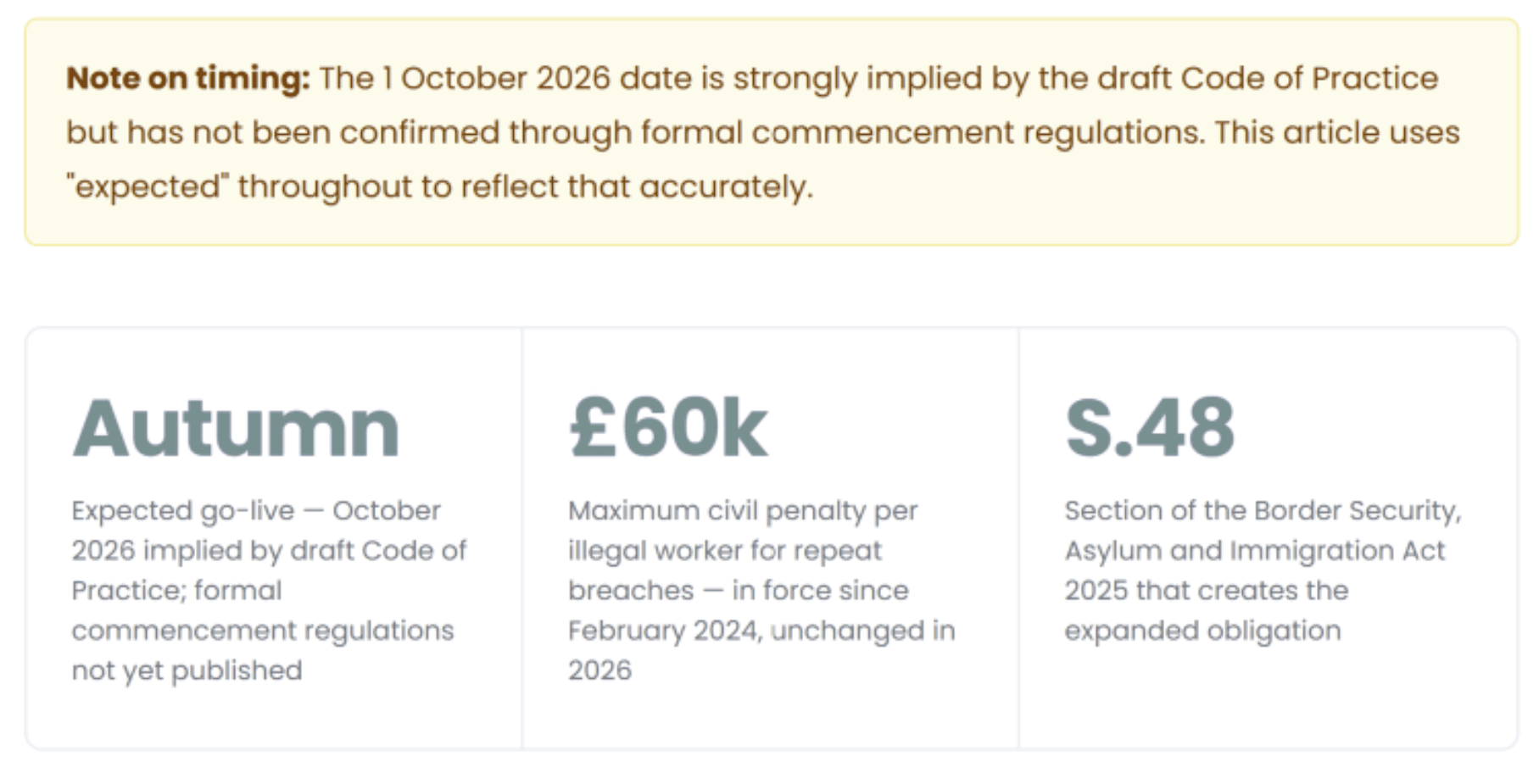
Formal commencement regulations have not yet been published. What the Home Office has done is include language in its April 2026 draft Code of Practice that assumes the changes apply to "all employment commencing on or after 1 October 2026." Employment law firms are treating Autumn 2026 as the working planning date. Employers should do the same.
Under the current framework, Right to Work checks apply to employees working under a contract of employment or apprenticeship. The Section 48 expansion covers a substantially wider group: workers without employment contracts, self-employed individuals, individual subcontractors, gig economy workers, and service providers matched through online job platforms. Whether the worker is directly engaged by the business or supplied through a third party, the check obligation is expected to apply.
The Penalty Exposure Is Real
This materially changes the compliance landscape for any business that uses flexible or contingent labour as part of its normal operations. Staffing agencies, logistics operators, hospitality businesses, and employers with significant zero-hours or gig workers will need to conduct and record Right to Work checks for a substantially larger group than they do today.
Civil penalties in force since February 2024 set starting penalties at £45,000 per illegal worker for a first breach and £60,000 for a repeat breach within three years. These are starting figures before any mitigating reductions and apply per person. An employer with five workers in breach at the first-breach rate faces a potential exposure of £225,000.

What No Formal Guidance Means in Practice
These penalties apply regardless of whether the failure was intentional. A check missed on a worker category not previously covered by the obligation creates the same starting liability as a deliberate evasion. The statutory excuse only applies where the prescribed check was carried out correctly before the worker started.
The Home Office has not published guidance explaining how checks should be conducted for the expanded workforce categories. Until that guidance arrives, businesses cannot fully prepare the mechanics. What they can do now is audit the composition of their workforce specifically the people who will fall within the new scope and ensure they have a system capable of conducting, recording, and retaining checks for that group at scale.

The Time to Prepare Is Before the Guidance Arrives
Every major Right to Work change in recent years has produced a compliance scramble. The Section 48 expansion is structurally more complex: workforce categories are broader, the legal framework is less settled, and the consultation response has not yet been published. Organisations that begin preparation now will have systems in place before the formal commencement date is announced.
When Section 48 extends Right to Work obligations to contingent workers, Xertilox is built for it. Every check automated. Every record auditable.
Book a demoSources: Border Security, Asylum and Immigration Act 2025, Section 48 (Royal Assent 2 December 2025); Home Office draft Code of Practice, April 2026; Employment Law Worldview, April 2026; Bates Wells, May 2026; Lewis Silkin, December 2025 and April 2